Streaming Fatigue
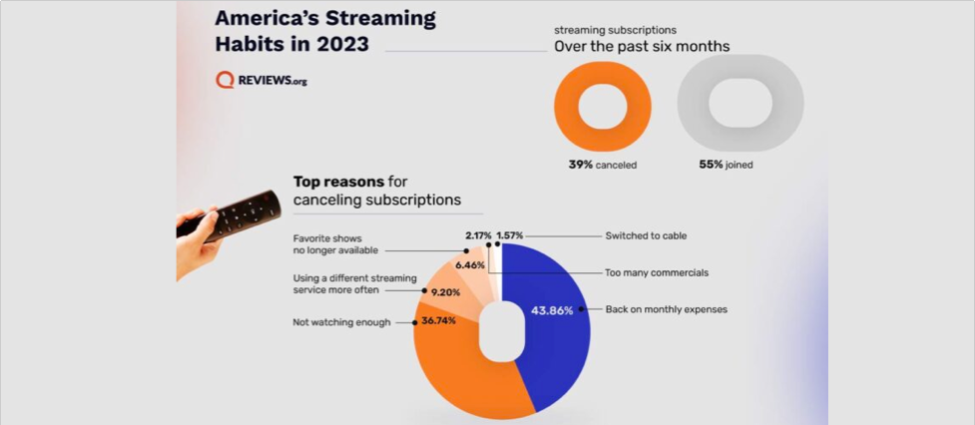
Streaming Fatigue: 39% Cancel Subscriptions and 55% Join New Services
The last year has seen the launch of major series The Last of Us and Poker Face along with the return of juggernauts Ted Lasso and You—all of which appear across multiple major streaming platforms. But with rising inflation contributing to elevated household costs, many Americans want to simplify their viewing experience.
We surveyed 1,000 Americans to gauge their streaming habits and found that over 1 in 3 have canceled a streaming service subscription in the past six months, with most respondents citing a need to cut back on monthly expenses. That’s even higher than our rate last year when we found that 25% of Americans were planning to leave Netflix.
So, is subscriber churn going to burst the streaming bubble? Let’s dive in and find out.
Viewers are subscribing to fewer streaming services
In the past year, Americans have seen their expenses increase by 6%, according to the Consumer Price Index, while our research shows that six of the major streaming services increased their prices by an average of 25%. That’s a major price difference!
So, when 39% of Americans reported canceling a streaming service subscription in the past six months, we found that 44% of respondents canceled a subscription to cut back on monthly expenses.
Respondents told Reviews.org they estimate their average streaming budget is close to $20-$30 per month, which doesn’t cover the cost of more than two services without ads.
Money wasn’t the only consideration when canceling a subscription. We found that over 1 in 2 of our respondents canceled because they don’t use the platform or the show they want to watch isn’t there anymore.
Basically, they are contributing to subscriber churn and only staying subscribed during the 12 weeks Ted Lasso is airing.
The other big change is in how many services Americans subscribe to. Your favorite shows may be spread across five different streaming platforms, but the average American subscribes to only two streaming services.
This number is down 50% from four subscriptions just six months ago.
A plurality of consumers (43%) say that Netflix is the streaming service they simply cannot live without.
Hulu came in second with 33% of the vote while Peacock hit 26%.
However, Netflix was also the most canceled service among Americans: 21% of respondents reported unsubscribing in the last six months.
Other streaming services weren’t spared either: 20% canceled Hulu, 14% canceled Peacock, and 13% canceled HBO Max.
This number is close to our fall 2022 report, which found that 25% of Netflix subscribers were planning to unsubscribe in the next year.
It’s not all bad news: 55% of Americans joined a new streaming service in the past six months. But, as you’ll see below, the constant unsubscribing and joining a new service contributes to subscriber churn.
Subscriber churn is real
You may be wondering “What is subscriber churn?”
Basically, subscriber churn is when people cancel—or add and then cancel—a paid streaming service like Netflix or HBO Max, which tends to happen when shows viewers want to watch are newly available.
According to Deloitte’s 2022 Digital Media Trends report, the average churn rate in the U.S. has remained consistent at about 37% for the last three years.
For example, if you watched The Last of Us on HBO Max but aren’t interested in anything else, then you may cancel the service until season 2 arrives. But streaming services want you to stay and try to promote related content, which leads to articles like “10 Things You Should Watch If You Loved You.”
While subscriber churn is losing streaming services a third of their subscribers each year, Nielsen has found that streaming still remains the dominant TV platform with around 37.2% of the market share over the last six months.
Cable TV, however, is close behind with 30.6% of the market share.
With rising monthly subscription costs for streaming services, does it make sense to go back to cable?
Maybe you just need to find the right app to cancel all of your unused subscriptions.